Catapult Pharmacology
Dose-Response Relationship
Dose-Response Curve
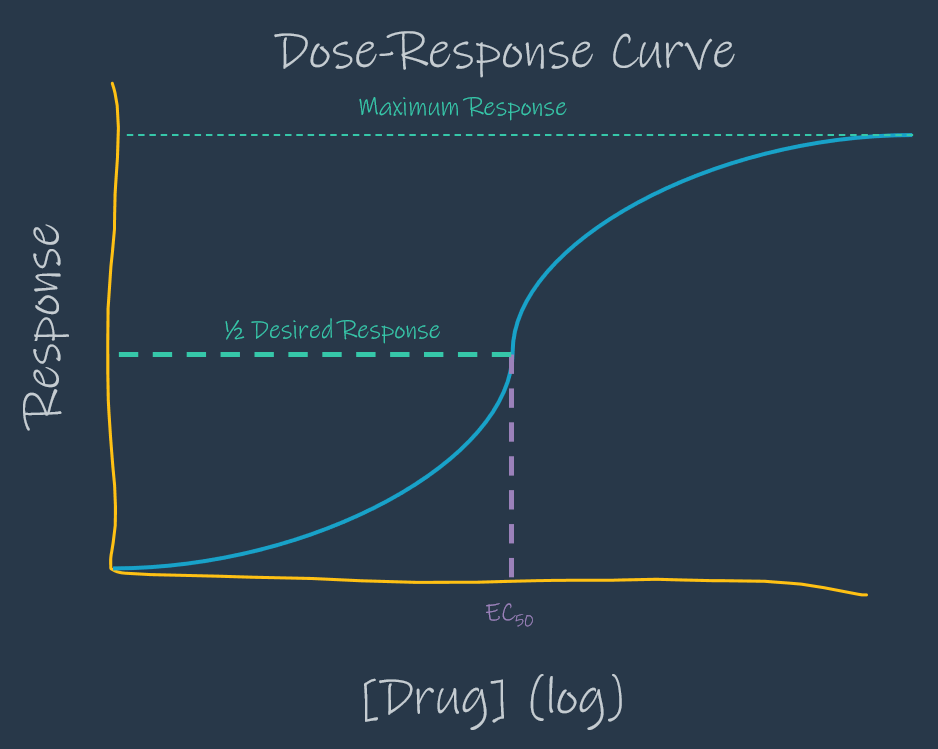
The dose-response curve is a visualization of the body’s response to a given concentration of a drug. As the concentration of the drug increases, the body’s response also increases. At low concentrations, the affected enzymes vastly outnumber the amount of drug, and the response increases with increasing amount of drug. As the enzymes or receptors become saturated, the response begins to increase slower until saturation is reached. See this concept illustrated below:
The dose-response curve is useful in illustrating the following concepts:
Full and partial agonists
Competitive and non-competitive antagonists
Potency
Full and Partial Agonists
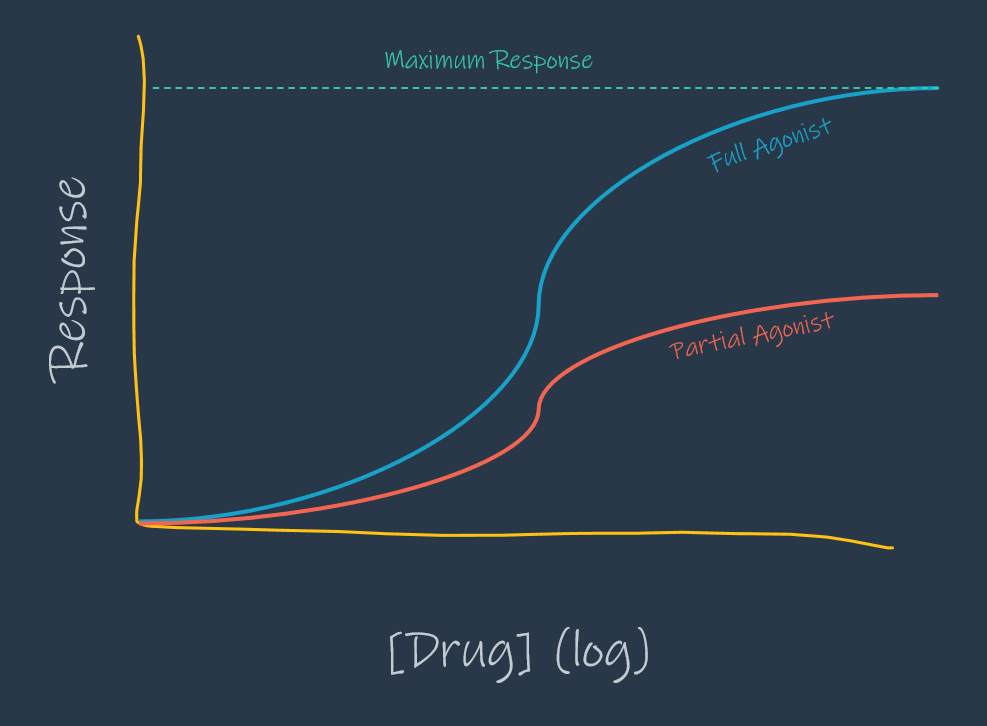
Full Agonist – when drug is engaged, it produces maximum effect**.**
Partial Agonist – when a drug is engaged, it does not produce the maximum effect.
Illustrated graphically below, the dose-response curve does not reach the maximum level of response for the partial agonist when compared to the full agonist:
Competitive and Non-competitive Antagonists
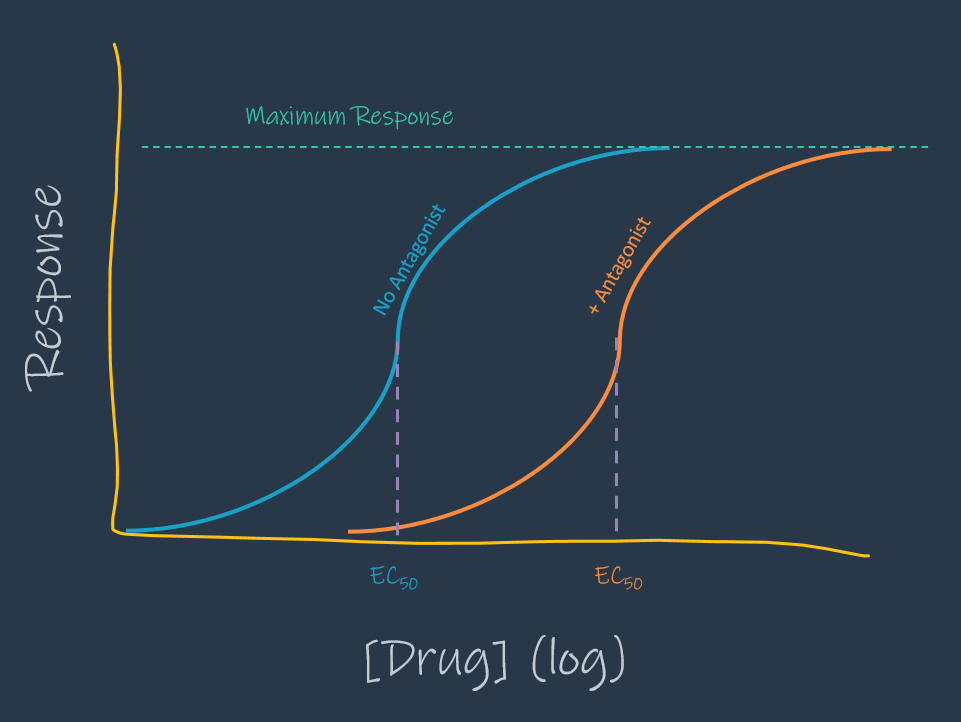
Competitive Antagonist – blocks the active receptor site preventing the other drug or natural substance from interacting at the active receptor site.
Reversible– Does not covalently bind to the receptor site.
Shifts dose response curve rightward because more drug is required to compete for the active site.
Maximum response remains the same. See graphical representation below:
Irreversible and Non-competitive Antagonists (Allosteric)
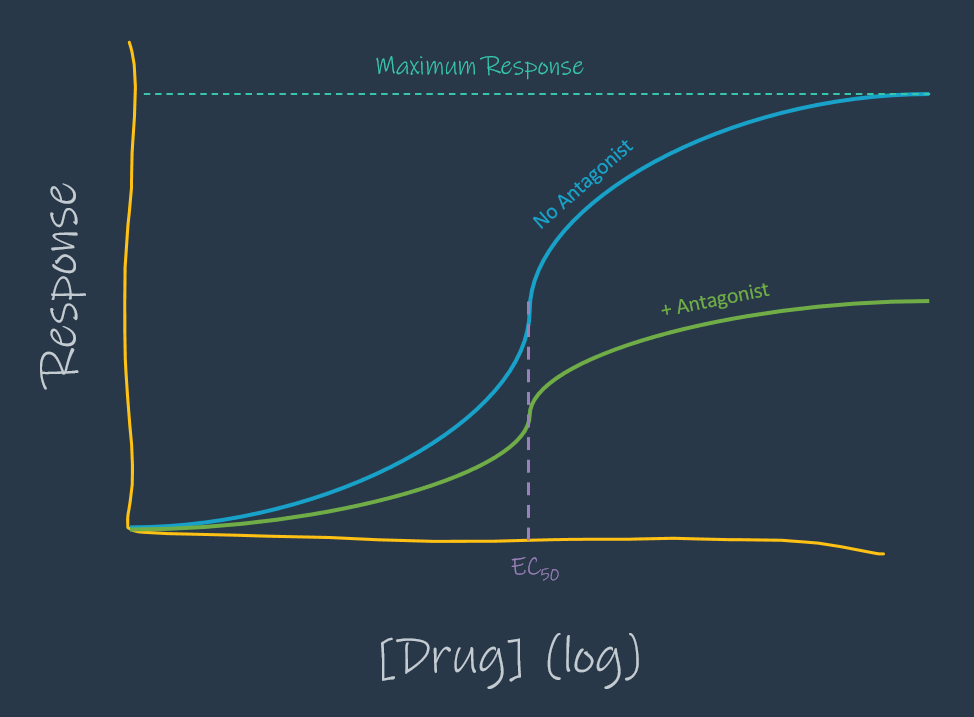
Irreversible antagonists irreversibly bind to the receptor site rendering it permanently unavailable.
Non-competitive antagonists (Allosteric) bind at another site on the receptor resulting in the receptor being unavailable to bind the drug or natural compound.
Effect of both types of antagonists makes the receptor site unavailable, which reduces the maximum response. See below:
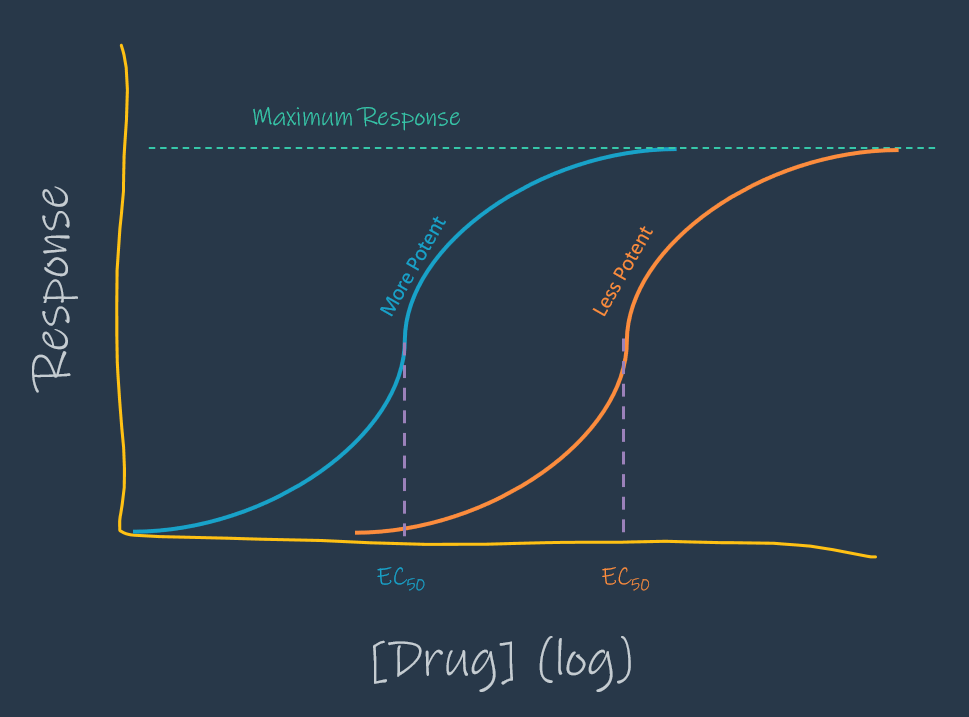
Potency
- Potency - the amount of drug required to cause a specified effect. Graphically represented below:
Other Concepts
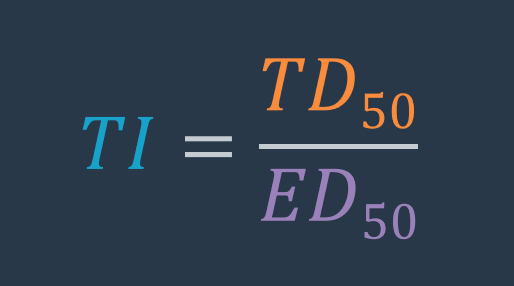
ED50– median medication dose that produces the desired effect in ½ of the population.
TD50– median medication dose that produces a toxic effect in ½ of the population.
Efficacy - the ability of a drug to produce the desired effect.
Therapeutic Index (TI) - A ratio of the dose of that produces a toxic dose in half of the population to the dose that produces the desired effect in half of the population:
Therapeutic and Pharmaceutical Equivalence and Bioequivalence
Bioequivalence - performs in the same manner as the compared drug:
No significant difference in the rate and extent in which the active ingredient reaches the site of action of the drug when administered under the same dose and in similar conditions.
Pharmaceutical Equivalence - meets the following criteria:
Same active ingredient(s)
Same dosage form
Same route of administration
Same strength
Therapeutic Equivalence - meets the following criteria:
Pharmaceutically equivalent
Bioequivalent